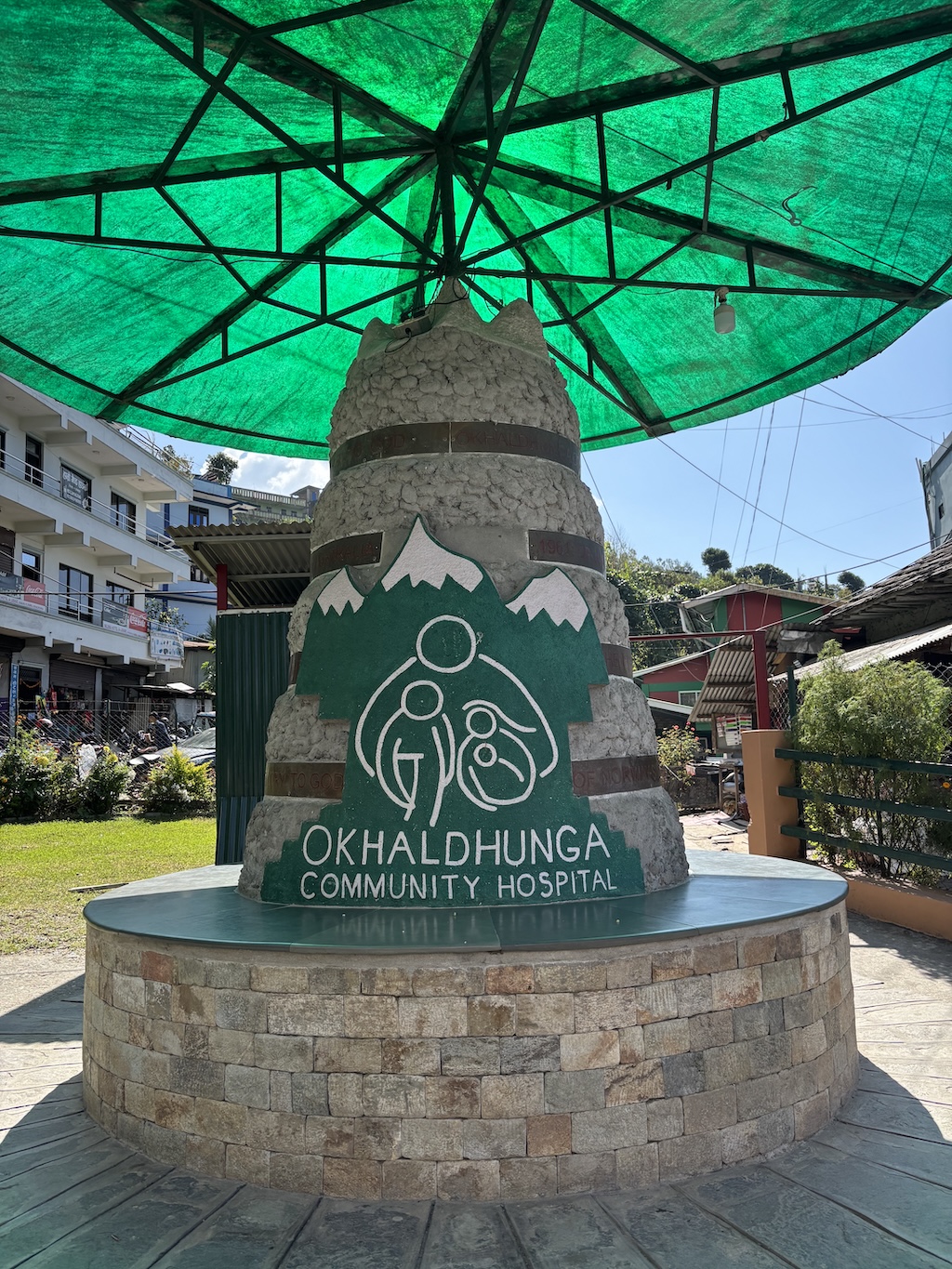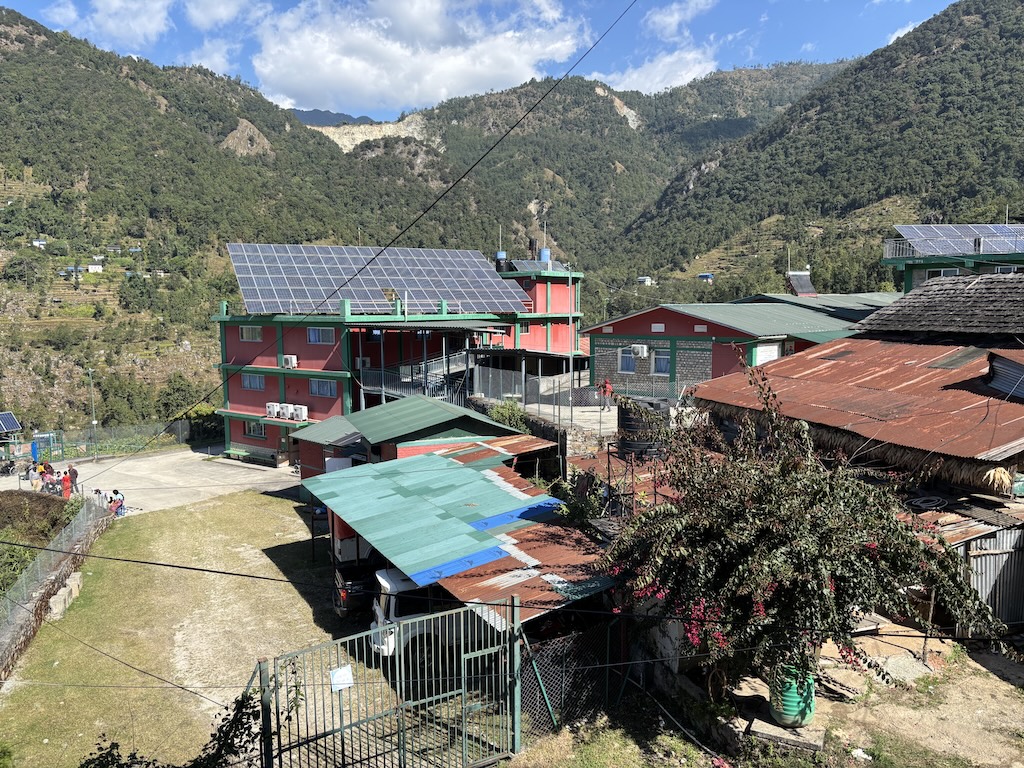
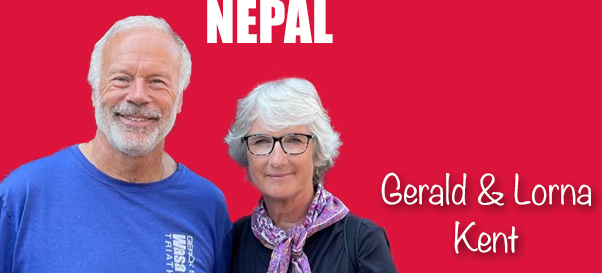
Gerry writing. I obtained my work visa on November 6, 2025 and the next day left for a visit to United Mission to Nepal’s Okhaldhunga Hospital with the chairman of UMN’s Board of Directors, Dr. David Rogers. He kindly invited me to come along on his visit and I jumped at the chance, since it gave me an opportunity to visit the hospital for the first time – and because part of my job is to try to help UMN maintain and improve its donor funding for the hospital. Dr. Rogers, who served at UMN’s Amp Pipal hospital from 1996 to 2002, was in Nepal for UMN’s Board meeting, which is held semi-annually. He is now retired and lives in Northern Ireland.
Okhaldhunga Hospital, which began as a small UMN health clinic in 1962, is now a primary care 50 bed facility. It is situated about 200 kilometers east of Kathmandu, in the hills south of the Everest region, serving a population of about 250,000. It also offers dental care, eye care, and rehabilitation services through its physiotherapy department.
It was an inspiring visit, seeing some of the work this hospital and its community health rehabilitation program is doing in this remote rural area. This hospital offers high quality care and turns no one away – if a person cannot afford to pay for the care needed, a fund is available to cover the cost of that care. It is like the hand of God reaching into this area in love, offering healing and help when illness and injury strike. It is a tremendous witness to the love of God revealed in Jesus Christ and provides credibility to the evangelical efforts of Nepali Christians – which have been very successful in this region, as well as elsewhere in Nepal. I was told there are 72 churches just in the Okhalkhunga district itself. When the health clinic was started there in 1962, there were none.
Although it is only 200 kilometers from Kathmandu (as the crow flies), it takes about 8 hours by vehicle to reach there, as the road has been heavily damaged by floods and landslides. However, it was a great opportunity for me to ask Dr. Rogers questions about UMN and to take advantage of his in-depth knowledge of the organization.
Presently, there are three expatriate specialists working at the hospital, along with six Nepali doctors, one of whom is the son of an employee in the maintenance department. That doctor was born in Okhaldhunga Hospital and has now returned to work there after his training.
The hospital’s community health program reaches out to disabled people in two local municipalities, using people hired from those areas to identify those in need. A physiotherapist and other health workers will then go to where that person lives, if need be, to offer help.
I watched a video about a young boy who had been bedridden and unable to participate in any activities his entire life. After receiving physiotherapy and other rehabilitation services from the program he is now mobile and capable of participating in a wide variety of family and community activities. The story about the remarkable improvement in his condition, through the treatment offered by the program, brought tears to my eyes.
It’s an example of UMN giving a voice to the voiceless – being an advocate for those who cannot or do not have the opportunity to seek help for themselves.