
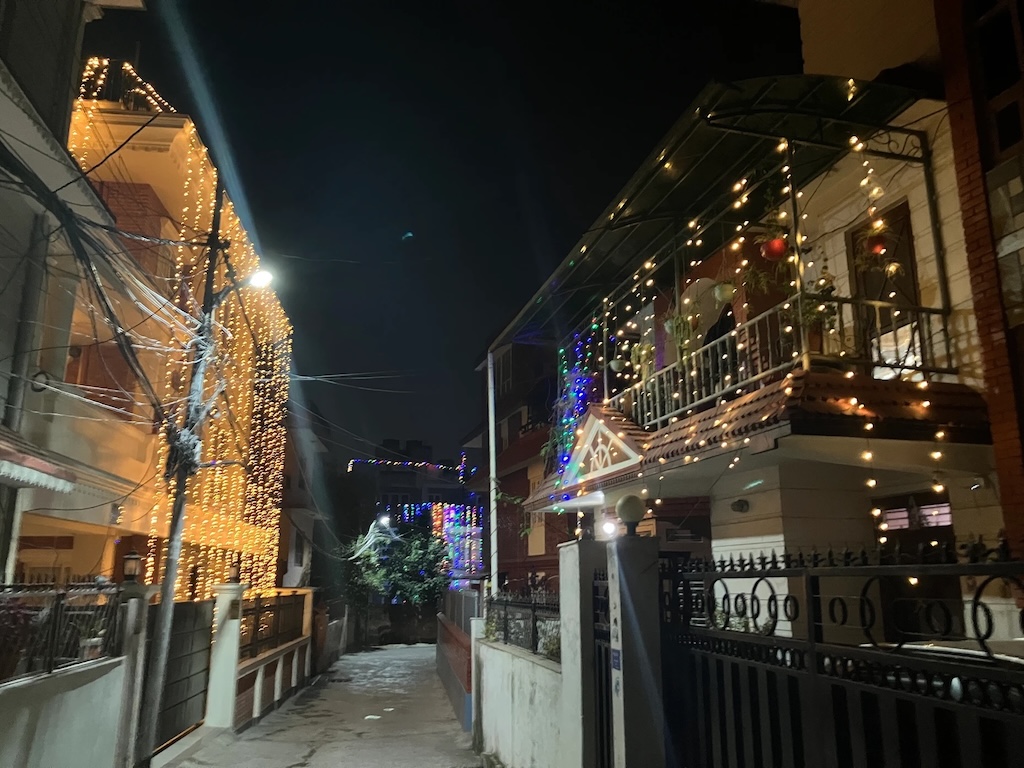
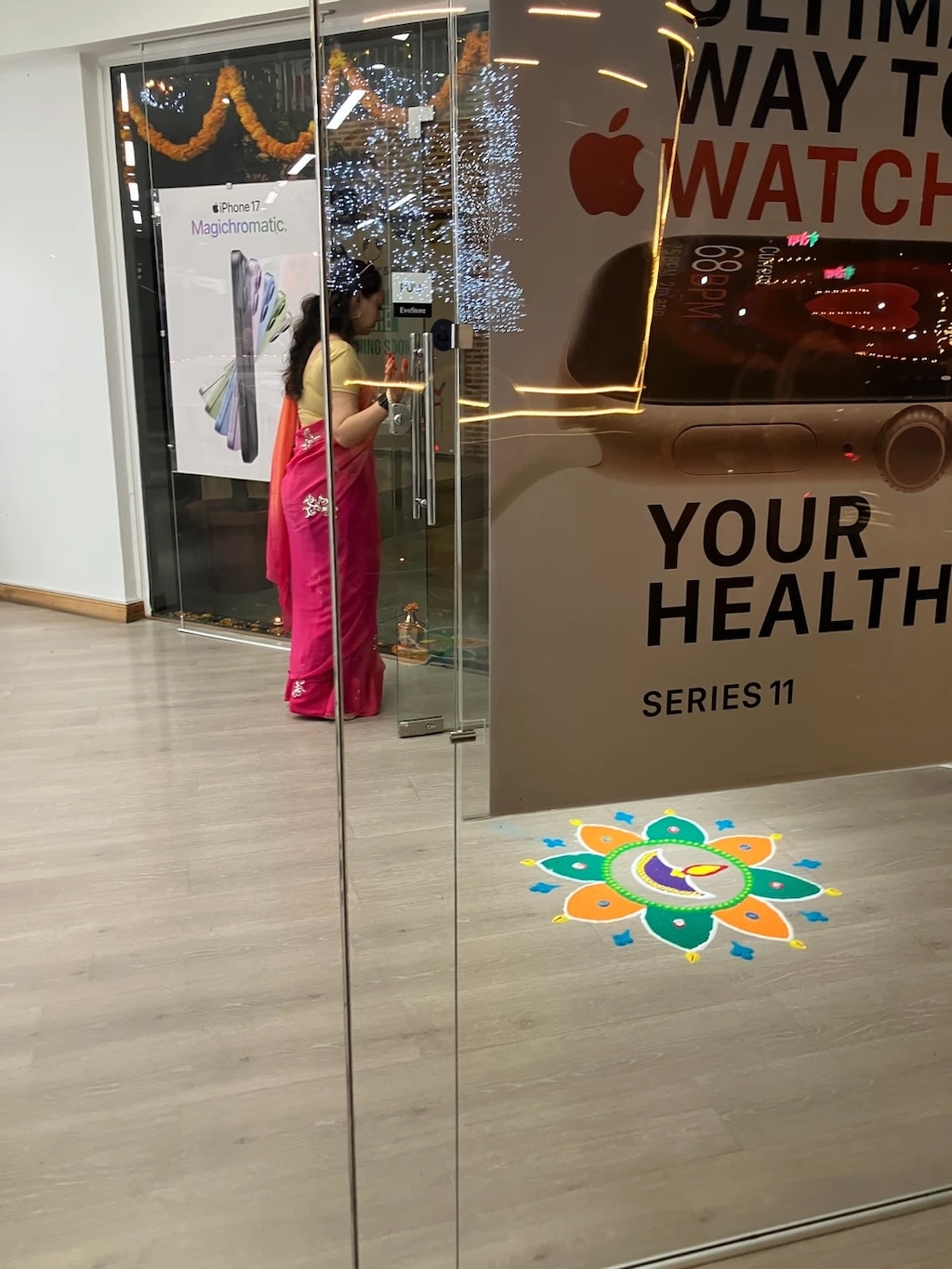
Mitch writing. The festival of lights in Nepal, called Tihar is one of our favourite times of the year. The rain is clearing, the mountains are coming out and the city is so festive. Tihar, is very similar to Diwali, the more commonly known five-day Hindu celebration in India. It follows the lunar calendar, and this year it was the second-to-last week of October. This was our second time around, but we were just as intrigued by how the city transforms. There are colorful dyed sand designs, rangoli, which are displayed in front of compound gates, and also colored or white lights usually strung up from buildings to hang down in vertical bands. In fact, two of our favorite Nepali words are used in this festival. The word “rungy-chungy” means colorful, and is often used to describe the rangoli sand designs. And the word “jilly-milly” means twinkling, bright, or sparkly, in reference to light, which describes the whole city during this time. The lights are put up just in time for the festival, and not left to linger very long. This makes the time feel special in its fleeting nature.
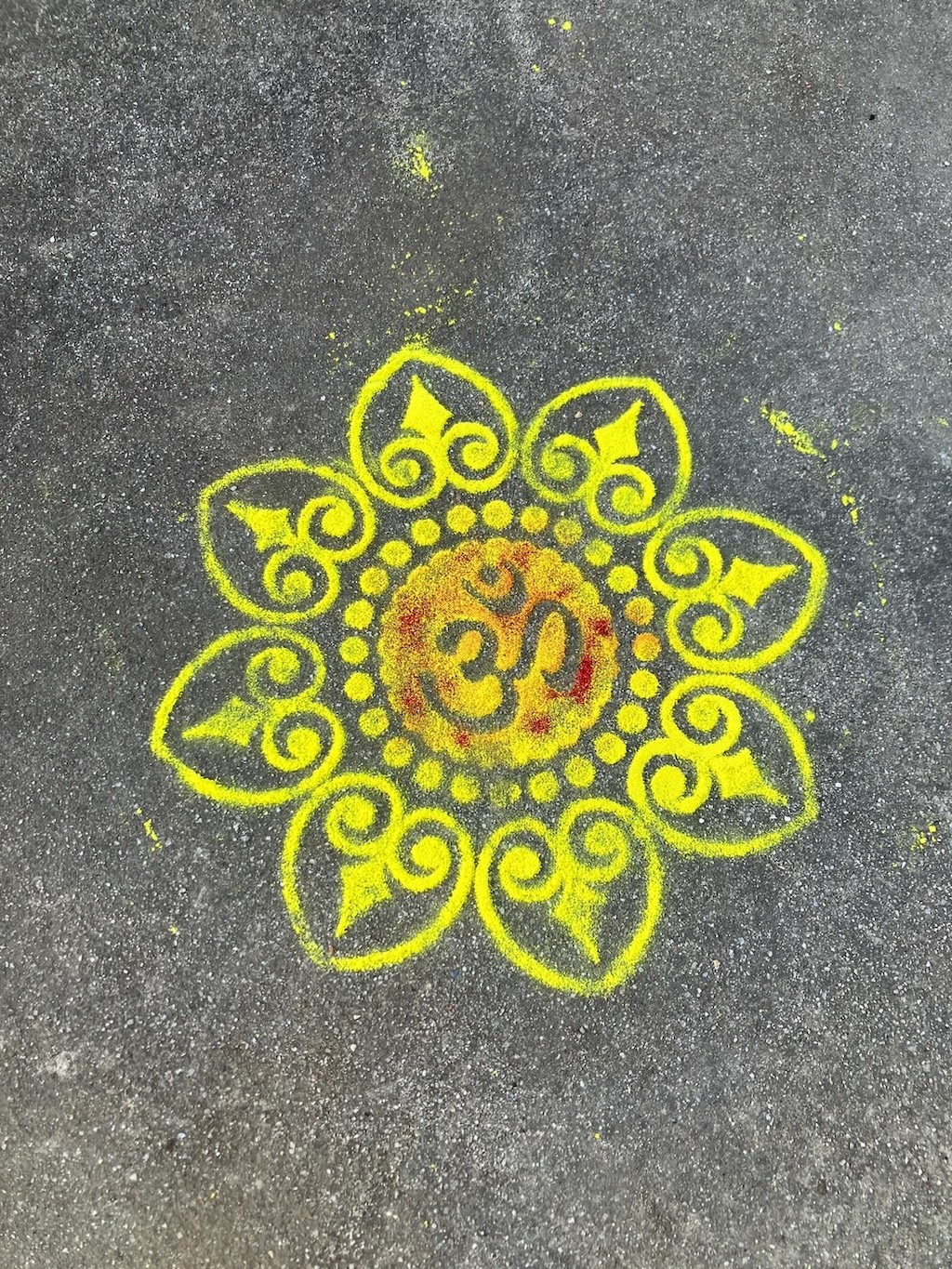
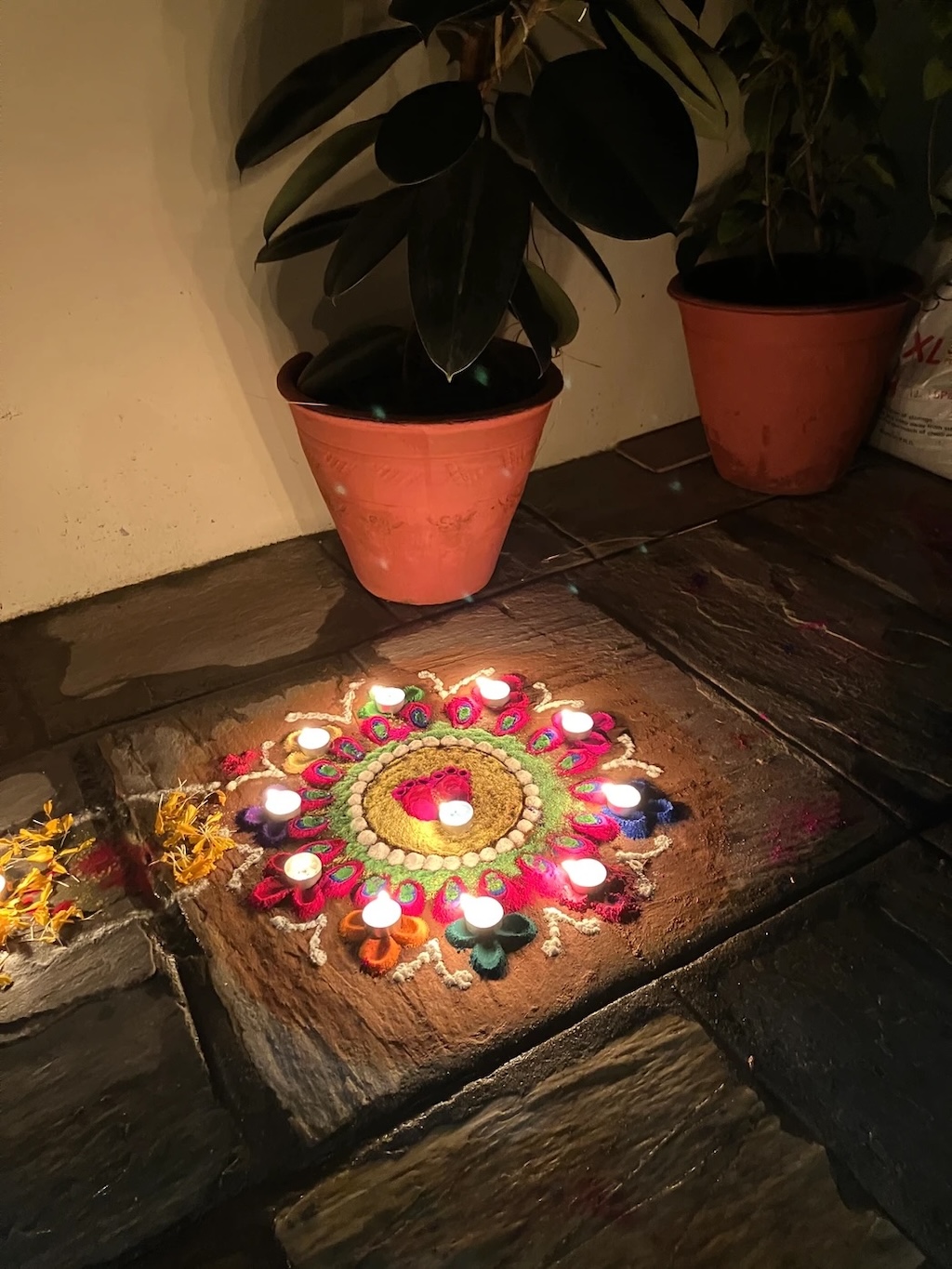
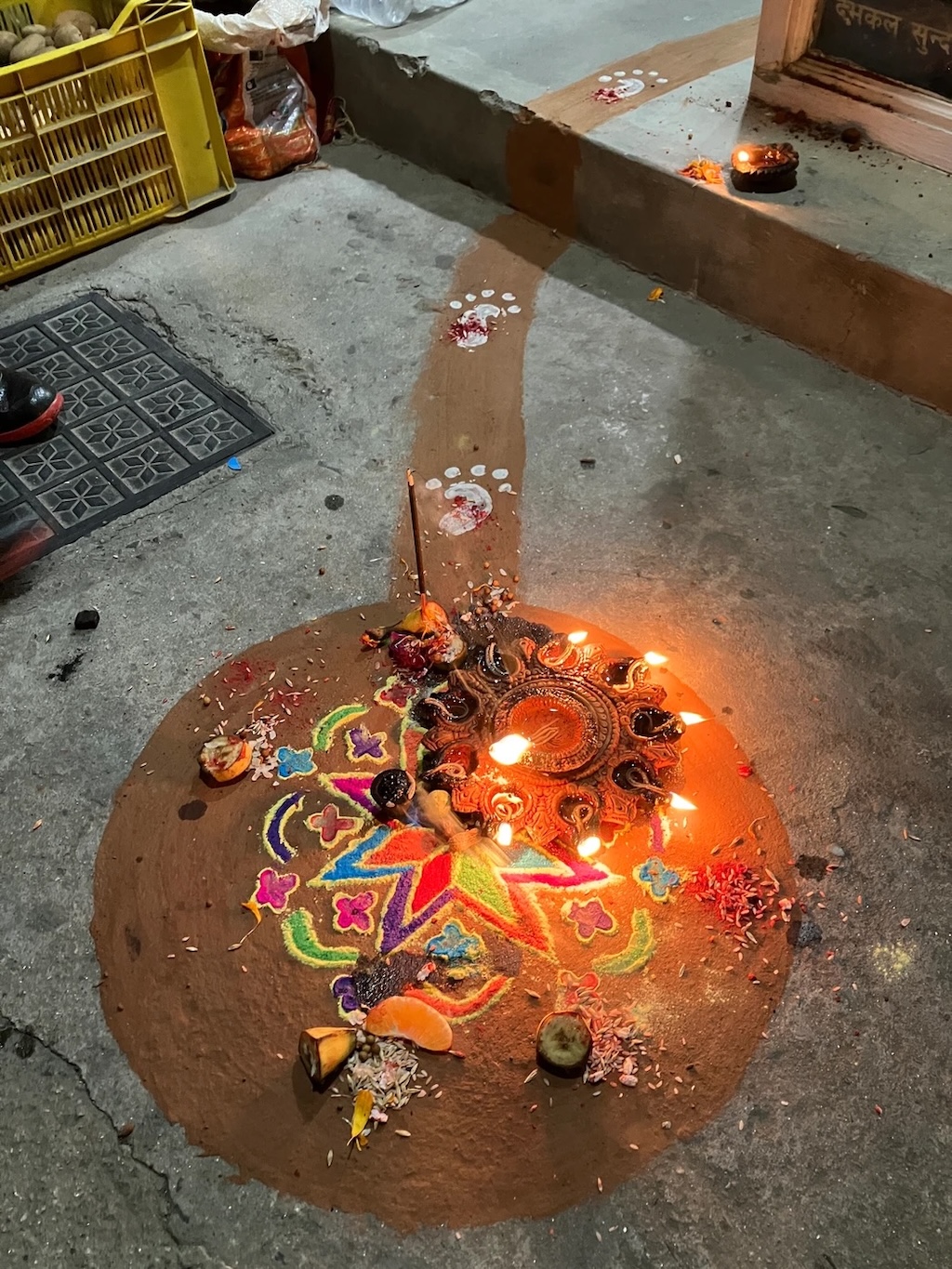
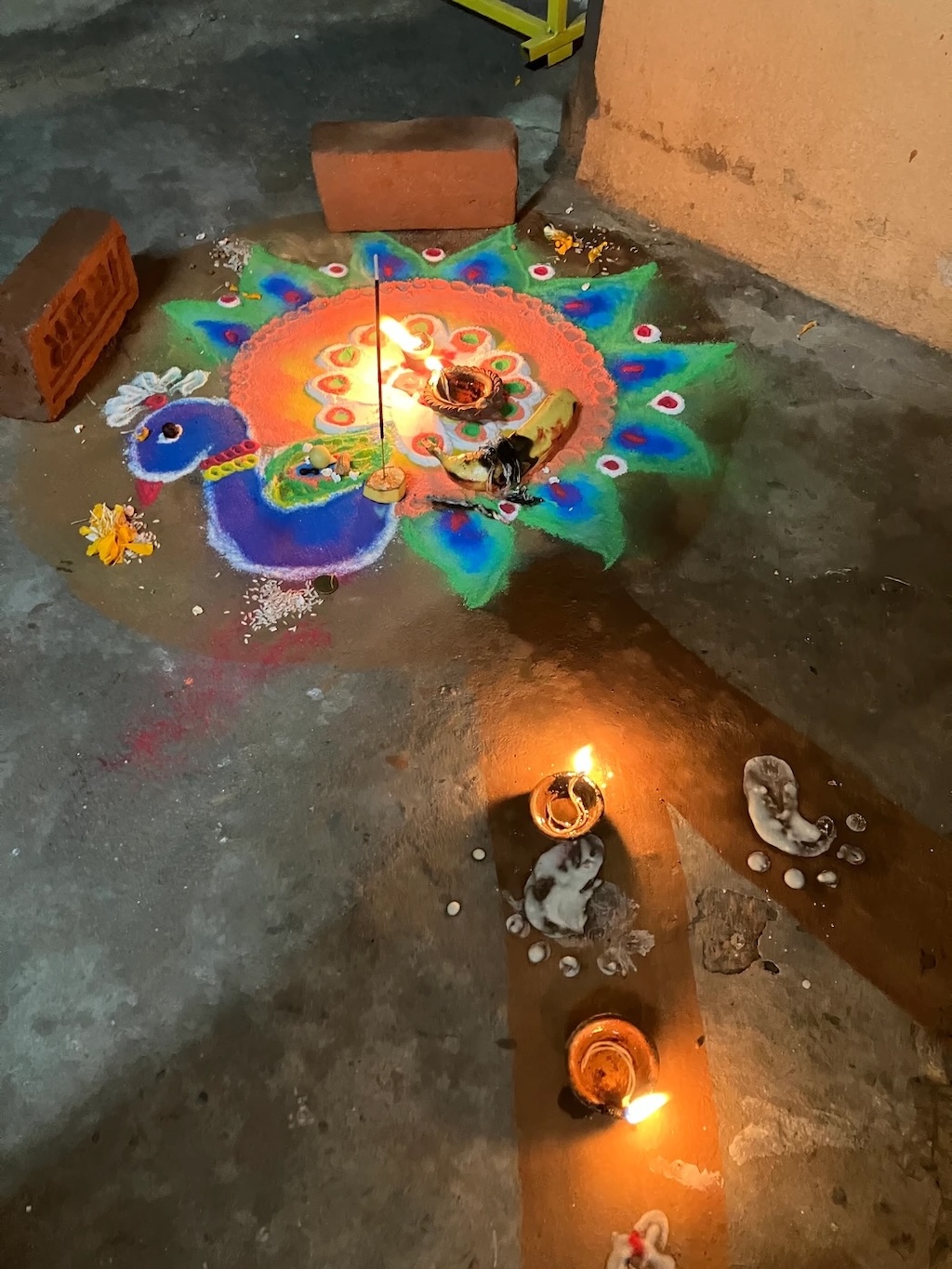
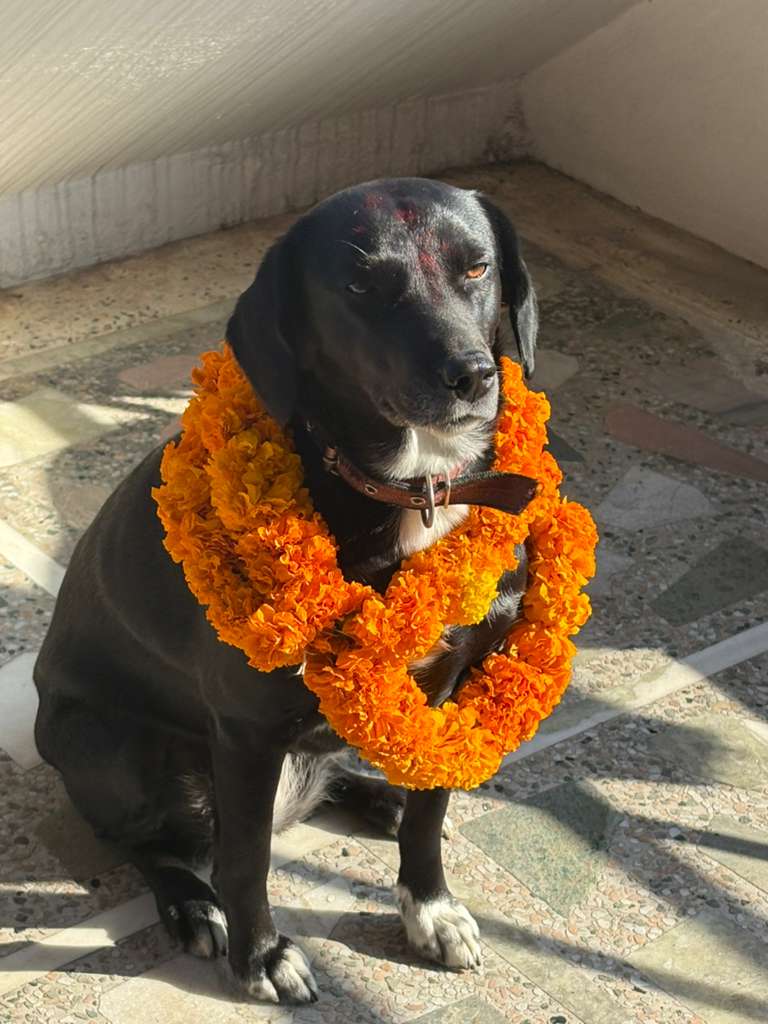
Another interesting aspect of Tihar is that each of the five days has a different focus. The first four are: crows, dogs, cows, and oxen. Then the last and culminating day’s focus is on siblings. On the day of the dog we gave our lab-mix rescue pet Nova a tika (red smudge on her forehead) and a marigold garland so she looked like other dogs in the city, both street dogs and family dogs. A younger member of the our family reminded her that this doesn’t make her a Hindu dog because we aren’t worshiping her. We just wanted to remind her that we love her and we value the friendship and companionship she brings to our family. On the last day of sibling (in our case, brotherly) love we also did as many Nepali families do, and gave the brothers a chance to say kind things about each other and then enjoy some sweet treats, in that order.
Also in the past few weeks, in the time between the Dashain festival and Tihar, we had our annual Learning Review at the UMN offices in Kathmandu, where the 40 or so staff from the various rural clusters come to hear and learn about the rest of the work that UMN has been doing. I was invited to speak at the first day’s morning devotions, and given the broad theme of education. For the first minute or so of my time I spoke in Nepali and introduced myself and our family and spoke a bit about my former career as a teacher. Then I delivered the rest of my talk in English and a co-worker translated for me. You can see the first part in the video below, although that’s the part in Nepali.
At the end of our week of learning review, the staff had a day of relaxing and celebrating with good food, music, games, and a talent show including some karaoke and lots of traditional dance. And a few of us non-Nepali staff presented a skit highlighting the irregularities of the English language. I put together another video featuring that day. You will first see our Nepali colleagues going wild as our Swiss colleague sings a Nepali pop song.
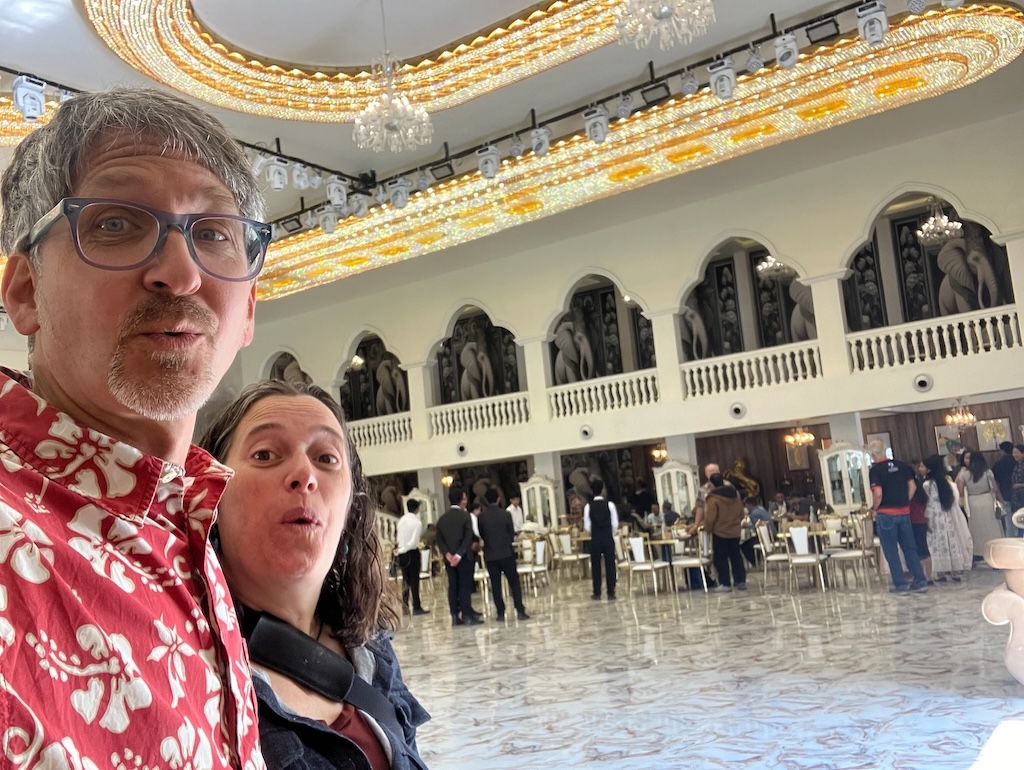
The relaxing day, or Bhetghat, was held at an event center close to our house, and seemed a bit fancy, hence our “oohing and awing” in the photo below.
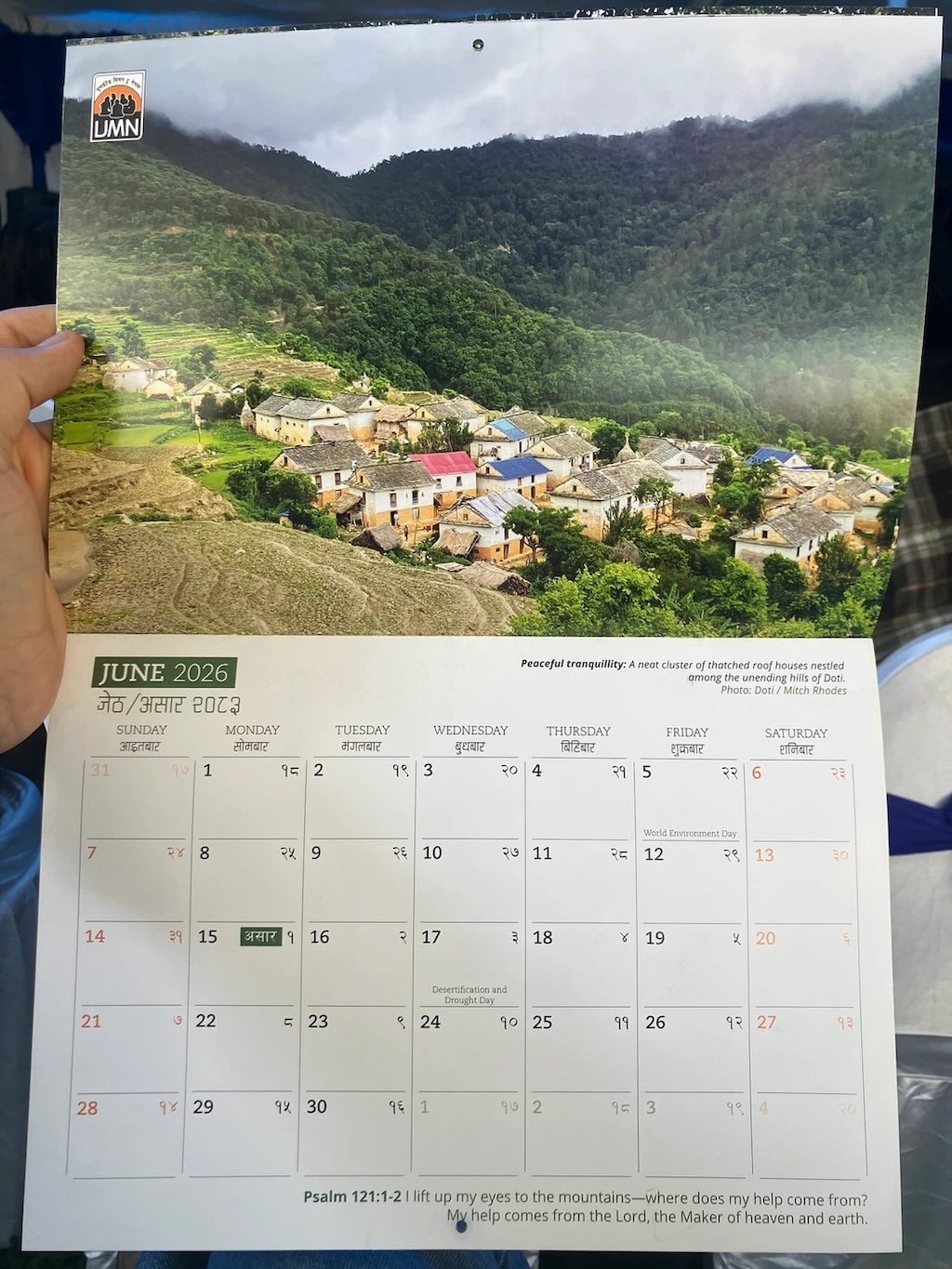
Also during Learning Review week our communications team released the UMN 2026 calendar. I was proud to be the photographer of the picture they used for the month of June. It is a photo of a village from my trip to Doti in western Nepal last summer.
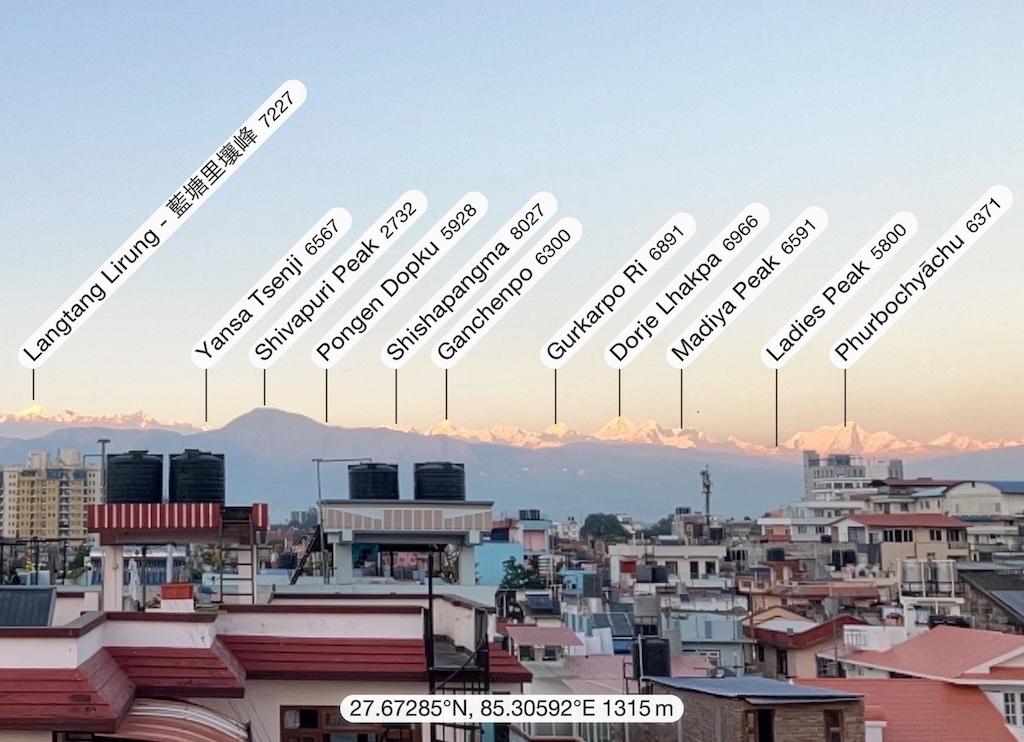
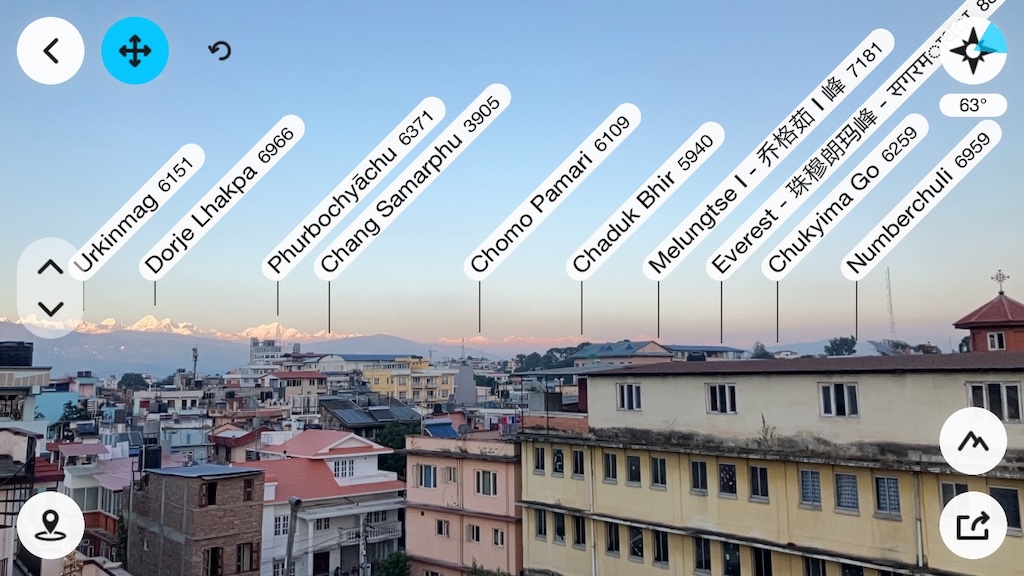
Lastly, Mountains! Sorry this is such a constant refrain from us (particularly me). But I just want to gush a little more about the amazing mountain views that we have been seeing in recent weeks. The weather has been consistently clear, and the air mostly free from pollution, thank goodness. So I’ve been using an app on my phone called PeakFinder to identify what we are seeing. The first photo below shows you about half the range of mountains we can see from our roof, not zoomed in at all. And elevation is given in meters. Notice that Everest is in fact visible from Kathmandu.
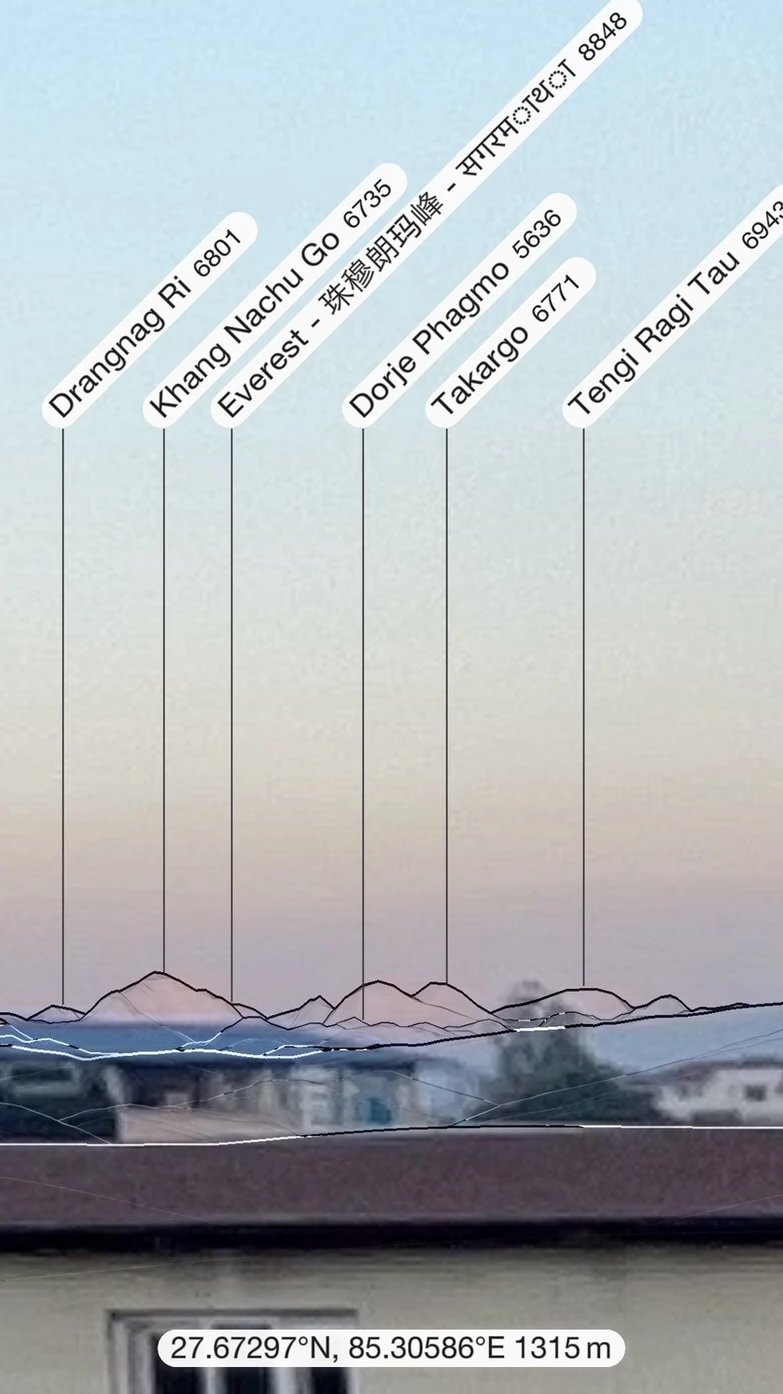
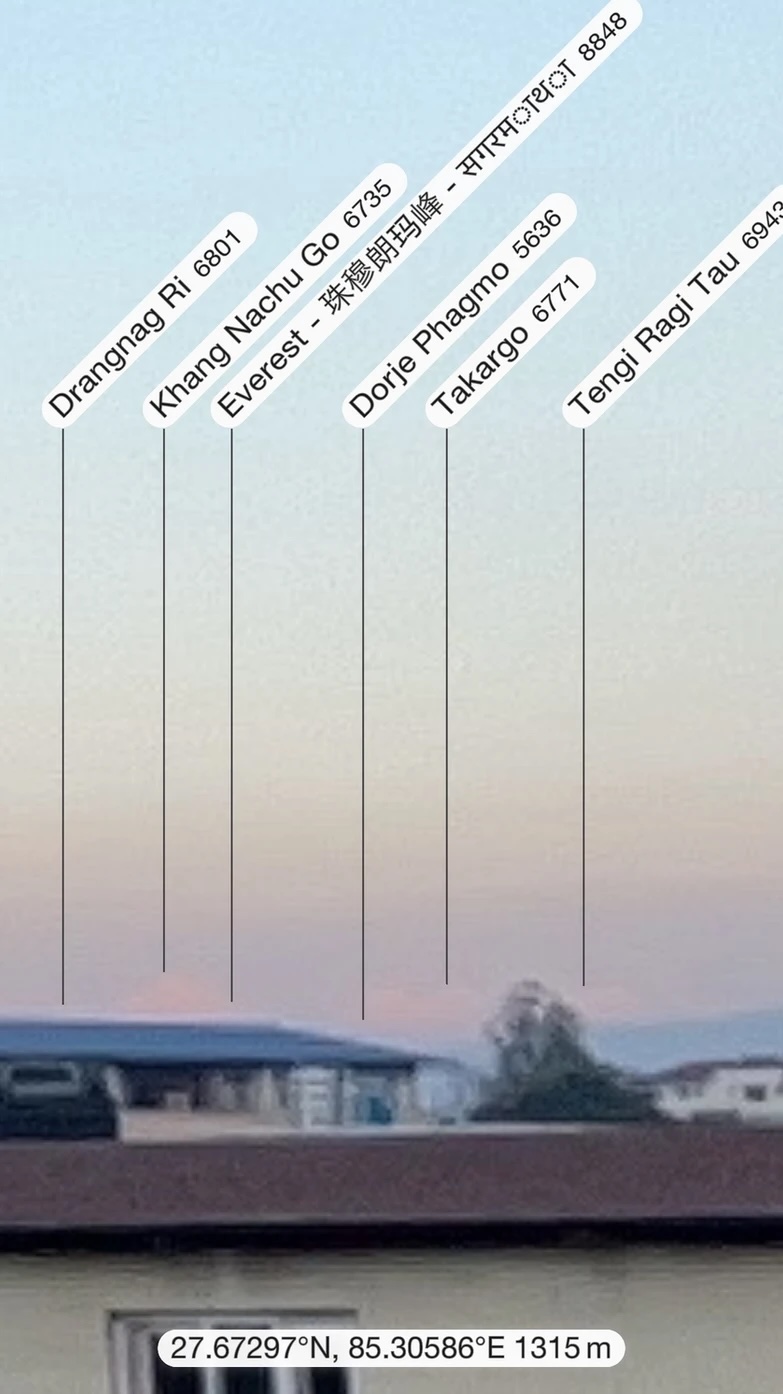
Then when you look below at my iPhone camera zoomed in as far as it will go, you can see how tiny Mt. Everest actually appears to us from our vantage point of about 100 miles away. It’s quite far to the east-northeast of us. The other thing literally getting in the way of our view of Everest is the pesky mountain Khang Nachugo, which is only about 22,000 ft. in elevation, as compared to Everest’s 29,031. So even though it’s that much shorter, it blocks the view because it’s only 70 miles away compared to Everest’s 100 miles. The first two photos below illustrate this obstruction. The left photo includes the app’s outlines of the mountains. The next photo is only what we can see, no outlines. Then the photo on the right is a larger field of view and includes a mountain called “Shishapangma” which at 26, 335 ft. is the 14th highest mountain in the world. The other interesting thing about this peak is that Shishapangma is actually located in Tibet. So on a good day, we can literally see China from our house! Unrelated, as a point of reference, Mt. Langtang Lirung, on the far left of that same photo, is almost straight north of us.