
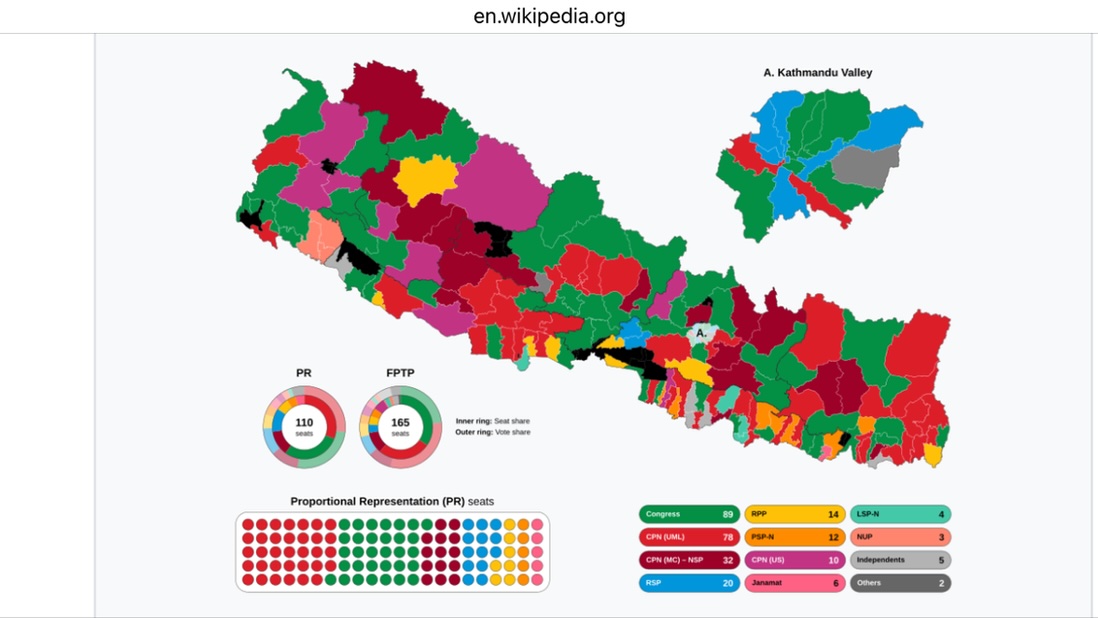
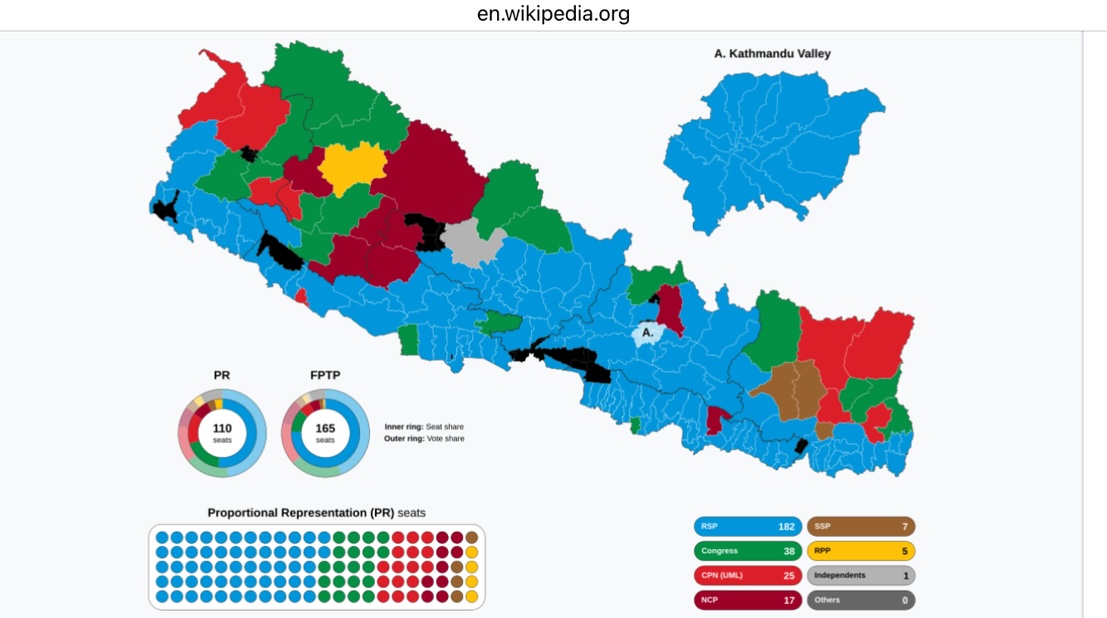
Mitch writing. Elections were held in Nepal and everything went smoothly. Election day itself and the following days of vote counting were quite uneventful. The party that won biggest, in an unprecedented (for Nepal’s short history of democracy) landslide, was the RSP, which billed itself as the party of change. Interestingly, in the previous election, the RSP had only gotten about 12% of the total vote. But this election they got 52%! And the other three major parties, who had mostly been sharing power ever since multiparty democracy was restored in 1991, lost about that same equivalent share of parliament that the RSP won. It’s hard to overstate what a huge shift this is for Nepal. See a photo below for before and after. The left is the result of the 2022 election, and the right is this 2026 election. The RSP party is blue. Also note that population density is concentrated in the southern plains bordering India. So even though there are still some large non-blue districts especially in the North, those are generally less populated hilly and mountainous areas with less voters.
You might already know that the new 36-year-old Prime Minister, Balen Shah, first became famous as a rapper before being elected mayor of Kathmandu in 2022 as an independent. As mayor and with a graduate degree in structural engineering, he focused on urban improvement and reform, in which he is considered to have been somewhat successful.
You might remember us writing before about how so many young people of Nepal live overseas for study or work (or both). There had been some discussion about making overseas voting possible for Nepalis for the first time this election. With so many Nepalis living overseas, it’s surprising that they aren’t one of the 141 countries around the world who make that a right of citizenship. Yet there were numerous news articles reporting about the sway that these young people overseas still had on this month’s elections. In their family phone or video calls, many of them worked hard to convince their parents and grandparents back in Nepal to cast their ballots for change. And in lots of traditional Nepali families, once you get the patriarch or matriarch to vote a certain way, the whole clan will follow.
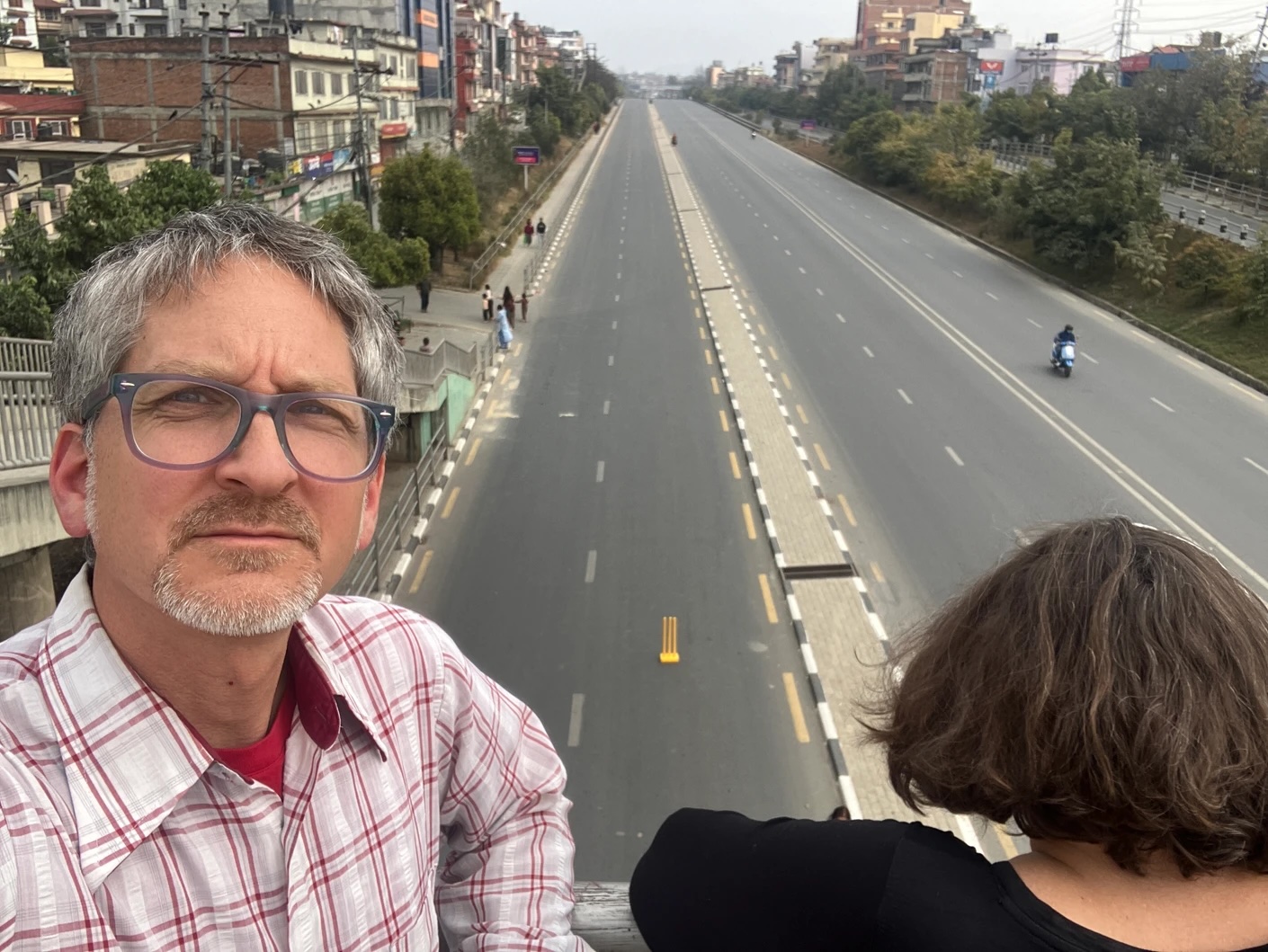
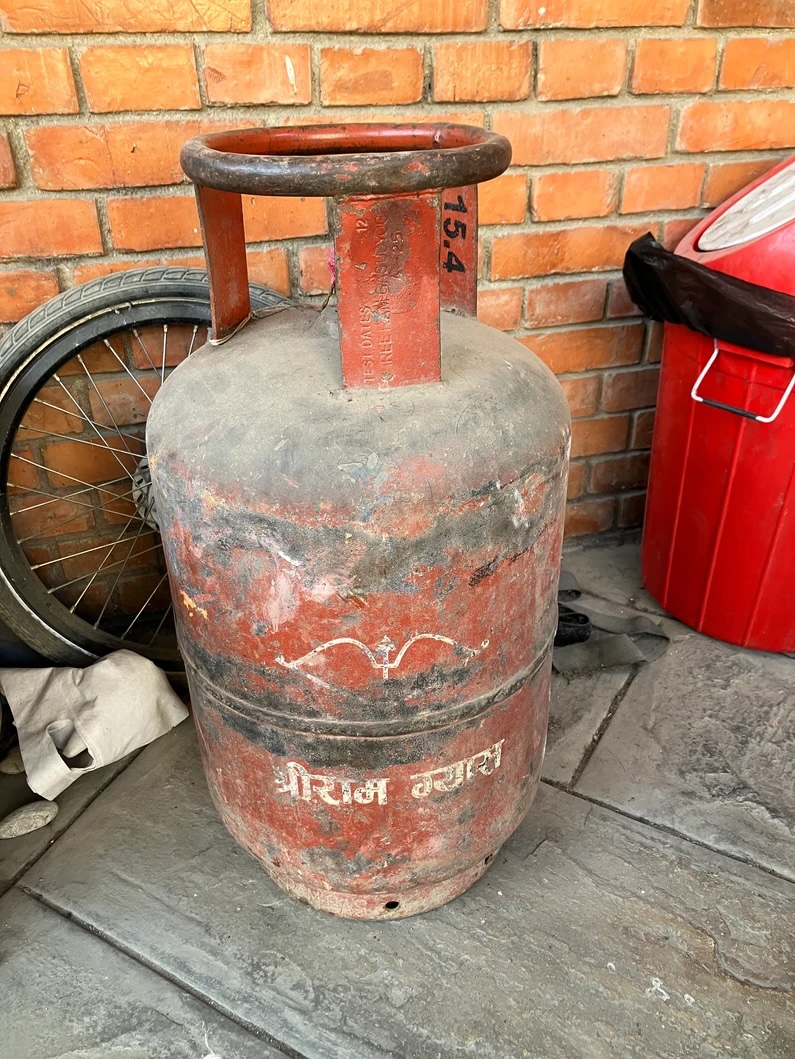
Speaking of voting, it was surprising to hear how difficult or also how easy it was for people to vote. One way the government makes it easy for Nepalis to vote, is that there are three work holidays given to most workers for elections. The first day is for travel from your current home back to your voting district (usually your childhood home). The second is the day of actual voting, and the third is to return back to your current home again. Indeed, many of our UMN colleagues were gone for most of the week for this, and I know that government offices were closed for the entire week, putting our own visa renewal work on hold (see below). Also, on the day of voting, everything is closed (including our UMN offices) and there are no buses or taxis on the streets –with a travel ban order by the government. Everyone walks to their polling station, and enough polling stations are set up around the country so that even people in remote areas can walk to theirs. Below you can see the ring road, the eight-lane road that goes around Kathmandu, when it’s empty on election day. The other photo is the LP gas cylinders that we use to cook. One cylinder lasts us about four months in our kitchen. They are now harder to find because of the war in West Asia (aka the Middle East.)
On the side of making it difficult to vote, besides the fact that overseas Nepalis can’t vote, it’s also difficult for people to change their voter registration when they move within the country. The hand over of power was smooth with the outgoing short term government wrapping up and handing off their work to the incoming government about 2 1/2 weeks after the election counting was complete.
The new government was sworn in on Friday the 27th of March and they got right to work.
In other news…
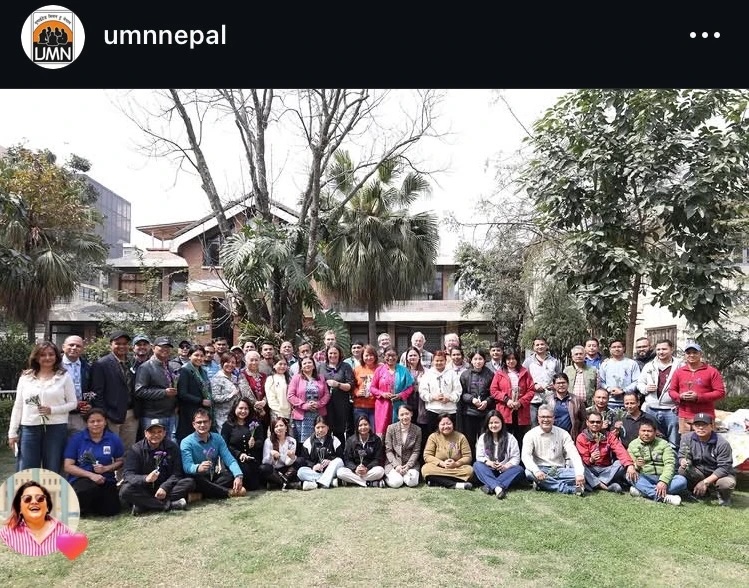
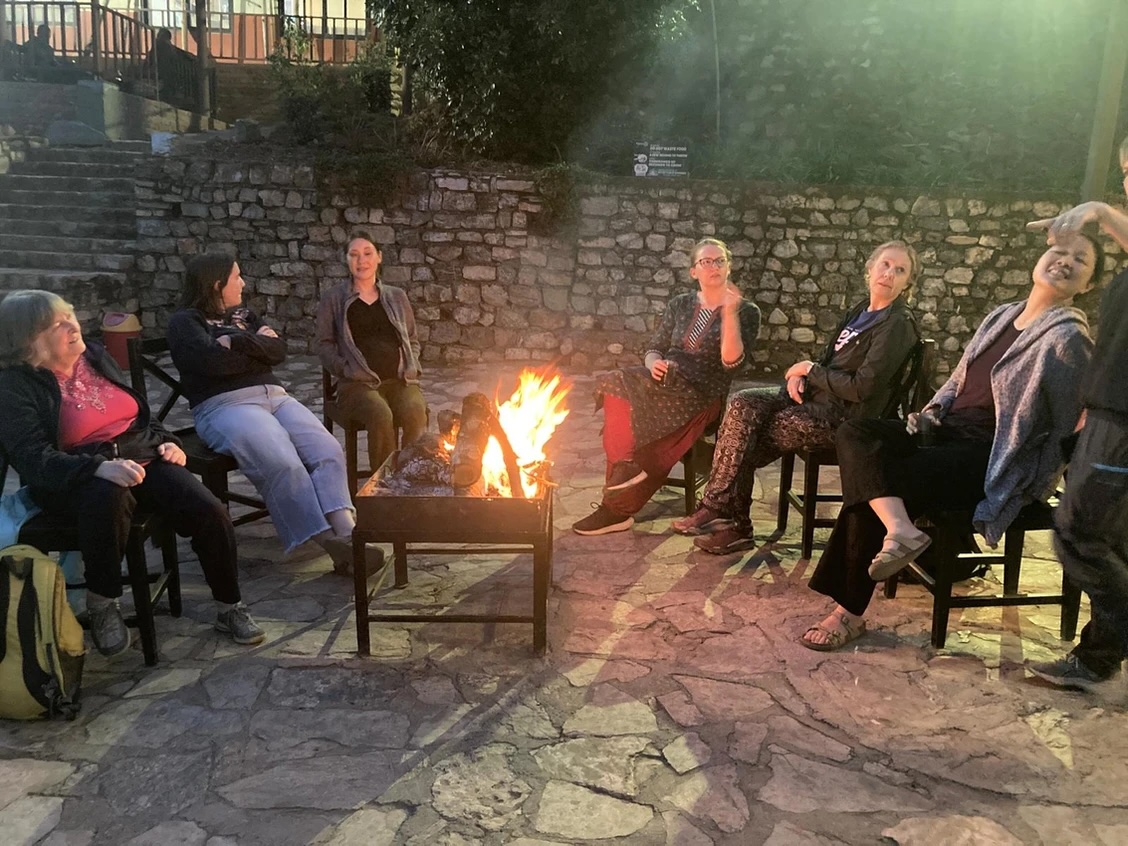
The photo on the left is of UMN’s 72nd birthday party and most of our Kathmandu office staff on the lawn, taken as a screen shot from our Instagram (https://instagram.com/umnnepal). The one on the right is from Lora’s time in Tansen. During her time there, she was invited to go for a special overnight with most of the non-Nepali women from our UMN hospital staff. The photo only shows about half the women there — and not Lora, in case you were looking for her. She was in Tansen for five days, which included her leading an English worship service.