

Lora writing. Each fall that we have been here has brought national grief: widespread flooding in 2024, the political uprising in 2025, and now, yesterday, there was devastation in Nepal, perhaps unlike anything that has ever been seen. The video footage is awful (and I would recommend that you don’t watch much of it, if any at all). It shows people fleeing a terrifying wall of water, mud, and debris. The mud overwhelms bridges, structures and houses. The scope of the personal and collective loss and the death toll will not be known for some time.
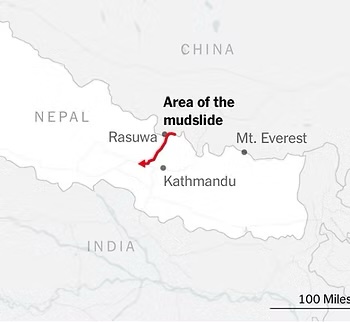
Thank you to many of you for checking in with us. We are personally not in an area affected by yesterday’s sudden and horrific flooding. We are home in Kathmandu, at work and at school (the boys) these days, and the worst of the flooding was in a different part of the country, straight north of us.
It seems so strange to be here in Kathmandu, sitting in a cafe, after a swim, writing you these words. I think about the people in the flood-affected area who were just going about their day as well, when unforeseen tragedy hit. My own unexpected grief of my mom’s death was so private and personal. It impacted many, but the scale was personal. Here we have a national tragedy. Before I could work on this blog, I checked in with the server at the cafe: are he and his family okay? Before confirming a playdate this morning: is your family okay? How is your heart?
At school drop-off, we talked with people who work on climate change-related mountain research, who over the past years have helped to implement early flash-flood warning interventions, and with people who work with the World Food Program and will now be coordinating a global response to the disaster. And we also heard from another parent about Auggie’s schoolmate from Korea whose father was working on one of the hydropower projects which were completely overwhelmed in the flash flood high up in the mountains. We heard the terrible report that he and many of his colleagues are still missing.
As the day goes on, we will likely learn of other connections we have to the victims, but as of yet we don’t know of others. UMN, along with all other INGOs here, has been put on alert by the government to stand by for a possible request for help with relief work now. But today we are still waiting on the government’s assessments. Of course, this has been made more difficult by the loss of cell phone service, washed-out roads and damaged or destroyed bridges. Reports are that 35 motorable bridges were completely washed away, and as many suspension bridges as well. Every single one until yesterday had connected a community to the rest of the country. If you want more information, this BBC link is very good, but please don’t watch too many videos. It is truly awful.
I invite you to join me in prayer for those you know, and those you do not, for the country we serve and the people in whom we have met Christ. We pray that the government will act swiftly and with cooperation and connection to international partners. My prayer this morning, when I have not known what to say, has been from the Taizé community in France. It is a song I might have with me all day. O Lord Hear my Prayer .
This morning I sent an email to the international staff of UMN. I ended with this prayer, “A Liturgy for Grieving a National Tragedy” in Every Moment Holy, Volume II: Death, Grief, and Hope by Douglas Kaine McKelvey. Here is a version adapted for an international audience by Bradley Bell, which I then adapted slightly.
A Liturgy for Responding to International Tragedy
Lord, as I rest in the grace of government stability,
Distant tragedy threatens to disturb my peace.
Will I pause long enough to care, to weep?
Or will I attend only to the hum of my life and my ministry?
Let me see that this, too, is my ministry.
O God who gathers what has been scattered,
Shelter Nepal in the shadow of your wings.
O Christ who binds our wounds, Be their great healer.
O Spirit who enters every grief,
Intercede now for these hurting peoples.
Be present in the midst of this far-reaching pain,
O Lord, for we are reeling again,
at the news of threat and loss of life that touches us all;
news of flourishing diminished; of individuals harmed;
of pain imposed, not only upon victims and their families
who bear now the immediate brunt of it—
but also upon an entire nation.
For we are all more fragile than we know.
Engage our imaginations and move our hearts to compassion rather than commentary,
that we would interact with these casualties not as news stories or statistics,
but as our own flesh and blood, divine image-bearers,
irreplaceable individuals whose losses will leave gaping holes in
homes, friendships, workplaces, churches, schools, organizations, and neighborhoods.
Be merciful to those now left behind.
Be present with those now bereaved.
Be mighty among those now afraid.
You do not run from our world’s chaos,
O God. So let us not either.
Be with all who move toward this need:
those who offer aid and protection.
Grant government leaders wisdom, courage, vision, sympathy,
and strength to serve with the humanity that ultimately flows from your heart.
Console those who have labored long and sacrificed to serve.
You have declared yourself a Mother who comforts her children under her wings,
a Father to the weak and fatherless
So may you now protect the most vulnerable: women, children, elderly, disabled, the targeted, the hated.
You alone have strength to carry these peoples.
Carry them now, O Lord.
You alone have wisdom and power to heal the wounds of nations.
Heal them now, O Lord.
Even in the shadow of such tragedy, let us not lose hope.
Give us eyes to see the rapid movements of mercy rushing to fill these newly wounded spaces.
Let us see in this the echoes of your own mercy and compassion—a foretaste of your kingdom coming to earth.
For in the cross you have shown that you are able to take even the very worst of circumstances and astound us with the greatest of good.
And so be merciful again, O Lord.
Amen.