History Of Mistawasis Memorial Presbyterian Church
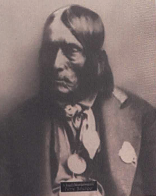
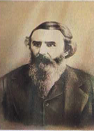
Chief Mistawasis (Big Child) was the Head Chief of the Prairie Cree. He was a great leader and visionary. He was the main negotiator at the Treaty 6 signing.
Chief Mistawasis (Big Child) was a visionary, he thought of his people in the present time and the future generations. He could see that he needed to sign the treaty with the Queen because the buffalo were dying and they couldn’t continue living their way of life, and needed to learn a new way of living. Chief Mistawasis (Big Child) wanted to make peace with the Queen and her people.
~ Mrs. Johnstone’s Grade 5 Class
The Cree ancestors of the Mistawasis Band migrated to present-day Saskatchewan from the woodlands of eastern Manitoba and the Great Lakes area of Ontario in the 17th and 18th centuries. This migration was fuelled by the European fur trade, specifically by the establishment of fur trade posts on the western shores of Hudson Bay in the years following 1670. Although the Cree did not completely relinquish their woodland culture, they developed a new means of subsistence on the Plains, which involved hunting the buffalo on horseback. They also developed a relationship of mutual dependence with the Hudson’s Bay Company (HBC), the company that would eventually become the leading commercial concern in the inland trade. In the course of that relationship, the Cree became the dominant middlemen of the fur trade in western Canada, controlling European access to furs trapped by the different tribes in the more remote regions in the west, while making a profit on trade goods exchanged for furs. The Cree occupied that position until the depletion of furs in the lands draining into the Saskatchewan and Nelson Rivers impelled fur traders to establish trading posts further inland and to the north of Cree territory. As the fur trade began to focus on the Mackenzie and Athabasca river systems, aboriginal groups located further north, such as the Chipewyan, took over what had been the exclusive domain of the Cree. As a result, the latter became progressively more involved with the provisioning trade, hunting deer and buffalo for meat to supply the employees of the increasing number of inland trading posts.
By the 1860s, the buffalo were disappearing from the eastern Plains, the homeland of the Cree. To find buffalo for their own subsistence, the Cree were forced to enter the territory of the Blackfoot, further west. Although the Cree and Blackfoot had been peaceful trading partners during the former nation’s tenure as middleman in the fur trade, the depletion of their common food source increasingly led to violent conflict between them. Together with the devastating effects of periodic epidemics, the battles over buffalo territory began to decimate aboriginal populations on the southern Plains. Both the Cree and the Blackfoot recognized the futility of continued warfare, and, in1871, a peace agreement was concluded between them. By this treaty, the Cree retained access to the buffalo in the Cypress Hills, the only place on the southern Plains where the buffalo were still to be found on a consistent basis. This, however, was a short-term solution to the problem of survival. The depletion of the buffalo signalled the beginning of the end of an era. The transfer of the vast HBC territories to Canada in 1870, and the prospect of agricultural settlement moving into the lands occupied by the Cree and other nations, was its death knell. The stage was set for the coming of the treaties, and the beginning of a settled way of life for the Cree of the Plains.
Chief Mistawasis became the Chief of the Mistawasis First Nation Plains Cree Reserve in 1876. He also signed Treaty 6 at Fort Carlton, SK on August 23, 1876.
Chief Mistawasis
Chief Mistawasis embraced Christianity and was baptized. After the signing of the Treaty 6 in 1876 Chief Mistawasis wanted a Cree speaking minister to come to Mistawasis Reserve.
There was no church on the reserve, so services were held in the missionary’s house and the school after it was built in 1878.
A grant of 50 acres was given to Presbyterian Church by the Government.
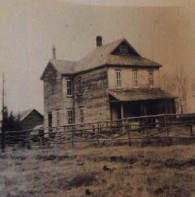
Chief Mistawasis wanted a church built. In 1887 the building of the Presbyterian Church began. (Early Church) In 1888 The Early Presbyterian Church was completed, the building accommodated about 80 people. (Early Church)
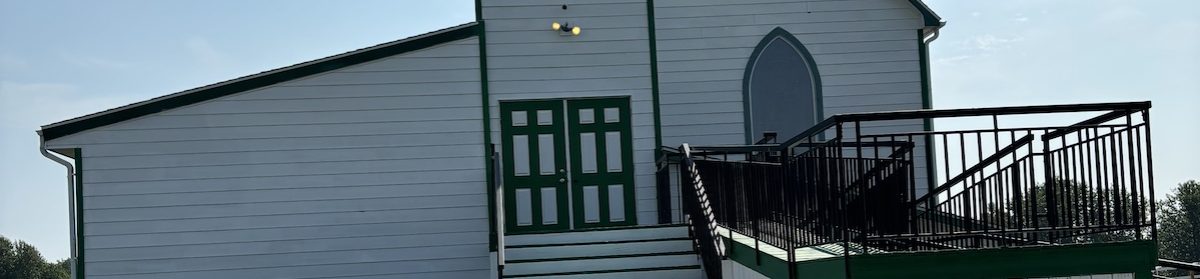
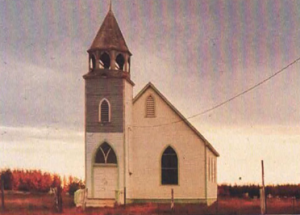
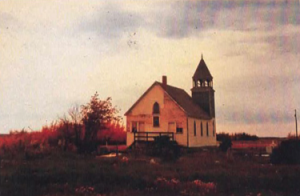
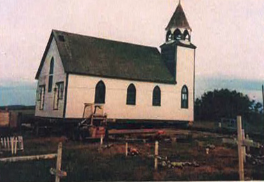
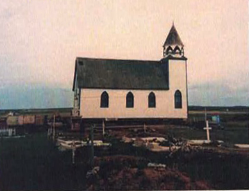
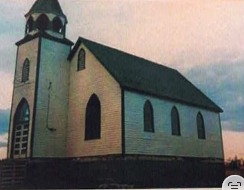
The Presbyterian Church shown in the picture was built in 1930 under the supervision of Rev. Moore by a group men from the reserve who had attended Industrial School, some of whom were; Solomon Johnston, Richard Cardinal, Joe Dreaver, James Bird.
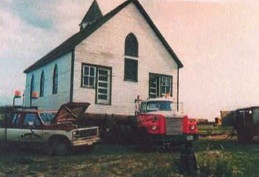
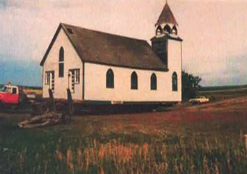
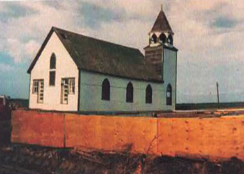
The church was originally located at the North end of the church yard but was later moved to its present location by Irvin Johnston and family after discovering that the foundation was beginning to fall apart.
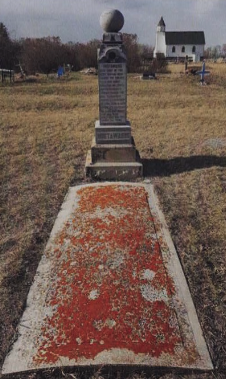
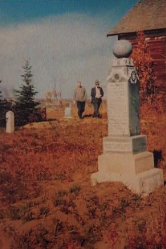
Chief Mistawasis’ final resting site is near the south side of the grave yard. The people of Mistawasis worked together to purchase a monument in Chief Mistawasis’ honor. The head stone reads;
A full grave ledger was later placed over Chief Mistawasis’s burial place.
MISTAWASIS
HEAD CHIEF OF THE CREE INDIANS
WHO SIGNED THE TREATY WITH
HER MOST GRACIOUS MAJESTY
QUEEN VICTORIA’S COMMISIONER
THE HONORABLE ALEXANDER MORRIS
LT. GOVENOR.
HE DIED JULY 21/1895
APPROXIMATE AGE 100 YEARS
HIS NAME WAS KNOWN FAR & WIDE
GREAT LOSS WAS FELT AMONG HIS TRIBE.
MISTAWASIS
Mistawasis Memorial Presbyterian Church
As with any community there are many ways we worship The Creator. In our community, some practice traditional ceremonies and some go to churches), some practice a bit of both.
In both our schools we do offer smudge and feasts. There are people in our community who can be contacted for more ceremonies.
For the purpose of our book we included the Presbyterian Church because of it being the only Presbyterian Church on a First Nation in Canada. We did not want to exclude anyone so we included pictures and a brief history of each church, no pictures of ceremomies are included.
We felt it was important to acknowledge that even though we may share a variety of spiritual beliefs that we all belong to the Mistawasis Community and that is something to be proud of.
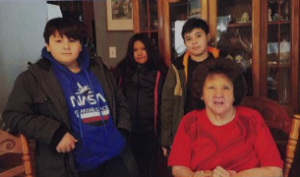
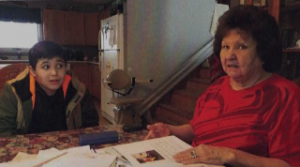
Crew Daniels, Monica Lariviere and Peyton Johnstone interviewed Linda Johnston about the Mistawasis Presbyterian Church. Linda Johnston is an elder at the Presbyterian Church. During the interview Linda shared pictures, stories and information about the church.
L-R: Crew, Monica, Peyton, Linda Johnston
L-R: Peyton, Linda Johnston
Donald Sanderson in suit on right, and an unidentified person on left, during graveyard cleaning old church shown to the North of Chief Mistawasiss gravesite that burnt down after graveyard cleaning.
Mission House (burnt in 1945)
Mission was located North of where church is now located.
The old foundation was crumbling and disintegrating and was ready to collapse. The solution was to build another foundation and move the church.
Irvin Johnston and his family took on the challenge of moving this large historical structure around 1980. They were later recognized by the Presbyterian Church of Canada for their hard work.
Some Past Ministers
Chief Mistawasis and his people were the earliest to enjoy the labours of Rev James Nisbet, at Prince Albert, and they never forgot the impression made by his life and teaching.
Chief Mistawasis wanted Rev. John Mackay to come to Mistawasis Reserve. Rev John Mackay was remembered by Chief Mistawasis as the interpreter for Rev. James Nisbet.
Reverend John Mackay Sr. was the first minister at the Presbyterian Church. He was a Cree speaking minister who moved to Mistawasis in 1876. John MacKay’s wife, Christina MacKay (nee McBeath was the sister of Mary Nisbet, who was Rev. James Nisbets wife. Rev. John Mackay not only was a missionary but he and his wife taught the people of Mistawasis to read and write in their own language.
“Chief Mistawasis is not an average Indian. He stands unusually high in the esteem, both of the white and red men, for intelligence and personal worth. He is the head chief of the Carlton Cree Nation, and from his character and position, he exerts a very wide influence. From the first he has been a steady friend of the mission, and it is cause for rejoicing that this noble Indian Chief, as according to the latest accounts received from the mission, he has come out openly on the Lord’s side, and has been enrolled among the followers of Christ”. The Presbyterian Church in Canada Archives 1883
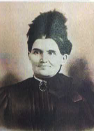
Rev. John Mackay
Christina Mackay
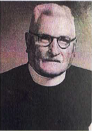
Rev. Moore
Rev. Howe
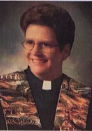
Rev. Trudy Meyer
Rev. Donavon & wife
Rev. Shepansky
Rev. Fontaine
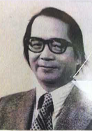
Rev. Song
Rev. Richie Morrow & wife Carol
Rev. George Yando
Rev. Kathy Bretzlaff
Long time Session Elder, Linda Johnston
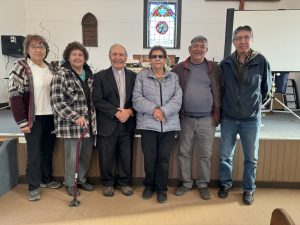
Rev. Folster and the Session Elders
(Norma Johnstone, Linda Johnston, Rev. Folster, Eva Ledoux, Keith Head, Lawrence Black)